

Field researcher, animal behavior specialist, and Dog lover
Puppies from America’s most trusted breeder network.

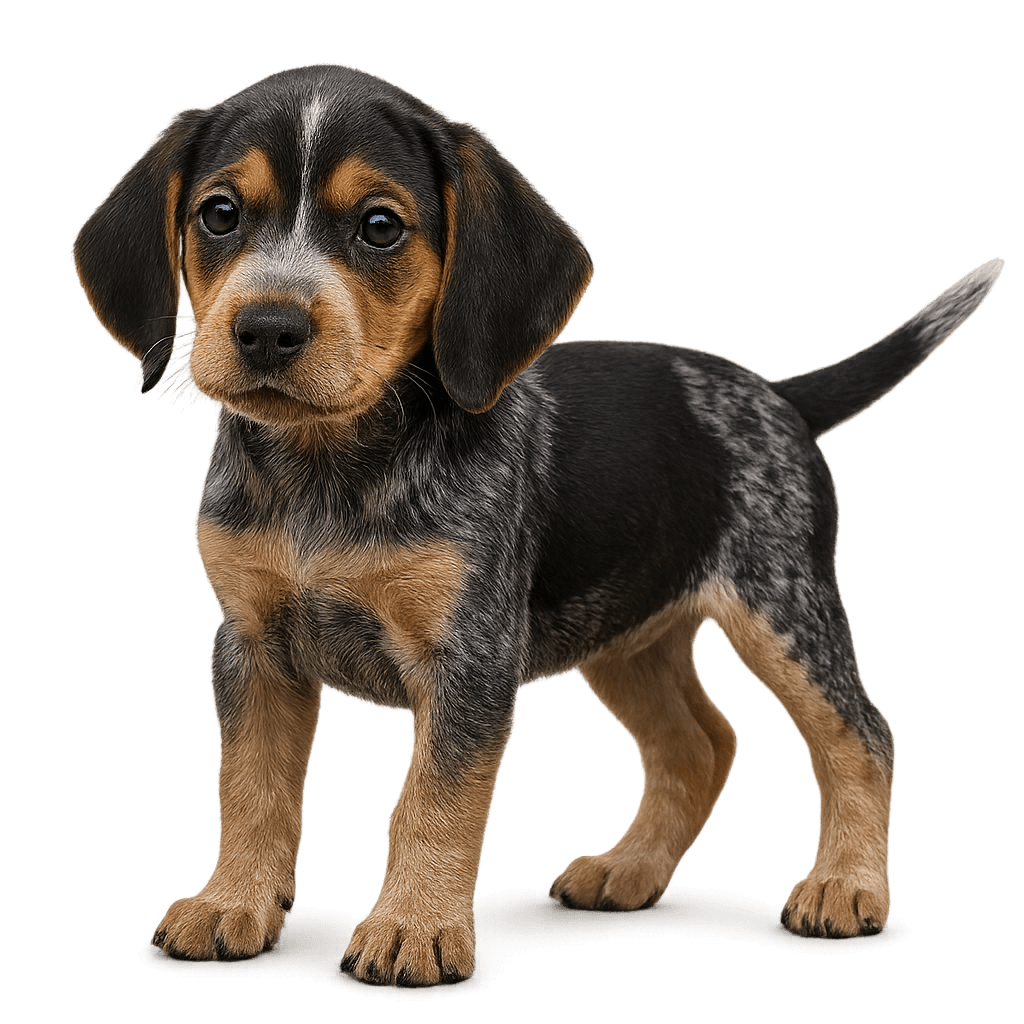
If you’re curious about a Bluetick Coonhound Beagle mix, you’re looking at a hunting dog cross that’s all nose and determination. I’ll be straight with you—this isn’t a couch potato companion. Both parent breeds were bred to trail scent for miles, bay loudly when they’ve got something, and work independently in the field. Mix them together, and you get a hound that’s driven, vocal, and built for the trail. In my opinion, this mix is best suited for active owners who understand scent hounds and can handle that signature hound stubbornness with patience and consistency. Let me walk you through what living with this cross actually looks like.
The Bluetick Coonhound is an American-bred scenthound developed specifically for tracking and treeing raccoons, though they’ll hunt just about anything with a scent trail. These dogs are known for their distinctive blue-mottled coat, deep baying voice, and relentless drive. They’re larger hounds—typically 21-27 inches tall and 45-80 pounds—with stamina that seems endless once they catch a scent. What I find impressive about Blueticks is their cold nose capability, meaning they can follow old scent trails that other dogs might miss.
Temperamentally, Blueticks are affectionate and loyal with their families but can be independent and stubborn when working. They were bred to make decisions on the trail without constant human direction, which translates to a dog that doesn’t always come when called if something more interesting is happening. Their energy level is high, and they need substantial daily exercise—we’re talking 60-90 minutes minimum of real activity, not just a stroll around the block.
Beagles are smaller scenthounds—13-15 inches tall, 20-30 pounds—originally bred in England for rabbit hunting. They’re famously nose-driven, incredibly social with people and other dogs, and have that same hound independence mixed with a surprisingly affectionate nature. Beagles are known for their merry temperament and their tendency to vocalize with bays, barks, and howls when excited or on a trail.
What makes Beagles interesting in this mix is their somewhat more biddable nature compared to Blueticks. They’re still hounds—meaning they’ll follow their nose over your commands if not properly trained—but they tend to be slightly more food-motivated and people-oriented. They also bring health concerns like hip dysplasia, epilepsy, and hypothyroidism to the genetic table, along with a tendency toward obesity if overfed.
A Bluetick Coonhound Beagle mix typically falls somewhere between the parent breeds in size, though this varies considerably. You’re looking at a dog that’s roughly 16-24 inches tall and weighs 30-60 pounds. The variation is significant because crosses can favor either parent. I’ve seen these mixes that look like oversized Beagles and others that are clearly Bluetick-dominant with just slightly smaller frames.
The build is usually athletic and lean with strong legs built for endurance. These aren’t bulky dogs—they’re meant to cover ground efficiently. Expect a deep chest, straight back, and that characteristic hound expression with long, droopy ears that help funnel scent toward their nose.
The coat is typically short to medium length, dense, and weather-resistant. Color-wise, you might see the classic Bluetick mottling (black ticking on a white base with tan markings), traditional Beagle tri-color, or various combinations. Some pups inherit the blue ticking, others look more like standard hounds with patches.
Shedding is moderate year-round with seasonal increases. The coat is low-maintenance—weekly brushing handles most of it—but these dogs will bring in dirt, burrs, and whatever else they’ve been rolling in. If you’re the type who wants a dog that smells like lavender shampoo, this mix will disappoint you regularly.

Here’s where it gets interesting. The Bluetick Coonhound Beagle mix inherits strong hunting instincts from both sides. This isn’t a dog that’s going to ignore squirrels or stay in an unfenced yard. Their nose rules their world, and when they catch an interesting scent, their brain essentially goes offline to everything else. I’d say this is the single most important thing to understand before bringing one home.
With their family, these mixes are typically affectionate and loyal. They enjoy being around people and often get along well with other dogs thanks to the pack-hunting background of both breeds. They’re not guard dogs—most will greet strangers with enthusiasm or at least curiosity rather than suspicion. What concerns me is their tendency to bay and howl, which is instinctive and difficult to eliminate entirely. If you live in an apartment or have close neighbors, this vocal nature can become a real problem.
The independence factor is real with this cross. These dogs were bred to problem-solve on the trail, which means they’re not naturally biddable like a retriever or shepherd. Training requires patience, consistency, and understanding that you’re working with a dog whose instincts sometimes override their desire to please you. That said, they’re intelligent—they just need a reason to care about what you’re asking.
Let me be clear: this mix needs substantial daily exercise. We’re talking minimum 60-90 minutes of real activity, and honestly, that’s often not enough. These are dogs built to hunt for hours, covering miles of terrain while tracking scent. A quick walk around the neighborhood barely takes the edge off.
What works better is engaging their natural abilities. Nosework and scent training are perfect for this mix—it gives them a job that satisfies their instincts while tiring out their brain. I teach tracking exercises where dogs follow scent trails to find hidden objects or treats, and hounds absolutely excel at this work. A 30-minute scent session can tire them out more effectively than an hour-long walk because you’re working the part of their brain that’s most developed.
Here’s what I recommend for exercise variety:
Without adequate exercise and mental stimulation, these dogs become destructive, vocal, and difficult to live with. If your lifestyle doesn’t include daily outdoor activities and time for training, this isn’t the right mix for you.
Training a Bluetick Coonhound Beagle mix requires understanding hound mentality. These dogs aren’t stubborn because they’re dumb—they’re stubborn because they were bred to make independent decisions. When they catch a scent, their entire focus shifts, and your voice becomes background noise. This isn’t disobedience in the traditional sense; it’s instinct overriding everything else.
What works with this mix is high-value food rewards and short, engaging training sessions. Hounds are notoriously food-motivated, which gives you leverage. Keep sessions under 10-15 minutes, use really good treats (real meat, not kibble), and quit while they’re still interested. Repetitive drilling bores them quickly, and a bored hound simply checks out mentally.
Recall training is the biggest challenge. Even with excellent training, you cannot fully trust this mix off-leash in unfenced areas. Their prey drive and scenting instinct are too strong. I’d recommend long-line training—using a 30-50 foot lead that gives them freedom to explore while you maintain control. Practice recall with the long line in increasingly distracting environments, always rewarding generously when they return.
Socialization should start early and continue throughout their life. Expose puppies to various people, dogs, environments, and situations while they’re young and adaptable. Most Bluetick Beagle mixes are naturally social with other dogs thanks to pack-hunting heritage, but proper socialization ensures they remain confident and friendly.
What I find important is cat and small animal exposure. Both parent breeds have strong prey drive, and while some individuals can learn to live peacefully with household cats, it’s not guaranteed. If you have small pets, introduce them carefully under controlled circumstances, and never leave them unsupervised together until you’re absolutely certain the dog is trustworthy.
The Bluetick Coonhound Beagle mix can inherit health issues from either parent breed. Common concerns include:
Life expectancy is typically 10-13 years, which is average for dogs this size. What I’d recommend is establishing care with a vet familiar with hounds, maintaining a healthy weight (obesity is common in food-motivated hounds), and staying current on preventive care.
The ear situation deserves special attention. Check and clean those ears weekly—moisture and wax buildup lead to painful infections that hounds are particularly prone to. If you notice head shaking, odor, or redness, get them checked promptly. Chronic ear problems significantly impact quality of life, and they’re preventable with regular maintenance.
This mix does best in a house with a securely fenced yard. Apartment living is possible but challenging due to their exercise needs and vocal nature. That baying voice carries, and neighbors rarely appreciate the symphony of hound sounds, especially if the dog is under-exercised and bored.
The fence needs to be substantial—at least 5-6 feet tall with no gaps at the bottom. Hounds are surprisingly determined escape artists when following a scent. They’ll dig under, climb over, or push through weak fencing without a second thought. Invisible electric fences don’t work well with this mix; their prey drive overrides the correction when they’re in pursuit mode.
If you live in a rural area with space to roam and neighbors who aren’t bothered by dog noise, this mix can thrive. Urban or suburban settings require more management—regular exercise schedules, training to minimize nuisance barking, and understanding neighbors. If you’re someone who works long hours away from home with limited time for outdoor activities, honestly, this isn’t the right dog.

Grooming requirements are relatively low-maintenance compared to many breeds. Weekly brushing removes loose hair and distributes skin oils. During seasonal shedding periods (spring and fall), increase to 2-3 times weekly to keep ahead of the hair.
Bathing is as-needed—these dogs don’t require frequent baths unless they’ve rolled in something unpleasant, which hounds have a talent for finding. Their coat naturally repels some dirt, and over-bathing strips protective oils. When you do bathe them, use a dog-specific shampoo and dry those ears thoroughly afterward.
Nail trimming should happen every 3-4 weeks if they’re not wearing them down naturally. Long nails affect gait and can cause discomfort. Dental care is important—brush teeth several times weekly or provide dental chews to reduce tartar buildup. And again, those ears need weekly checking and cleaning. This is non-negotiable with long-eared hounds.
Feed a high-quality dog food appropriate for their age, size, and activity level. Active adult dogs typically need 2-3 cups of dry food daily, split into two meals to reduce bloat risk. The exact amount depends on the individual dog’s metabolism, activity level, and body condition.
Hounds are notoriously food-motivated, which makes them prone to obesity. Monitor body condition regularly—you should be able to feel ribs easily without pressing hard, and there should be a visible waist when viewed from above. Excess weight puts strain on joints and can exacerbate hip dysplasia and other orthopedic issues.
Use that food motivation to your advantage in training. Save part of their daily ration for training rewards rather than feeding treats on top of full meals. High-value protein treats (real chicken, beef, or fish) work better than carb-based biscuits for maintaining focus during training sessions.
Initial purchase or adoption of a Bluetick Coonhound Beagle mix varies widely. From a breeder (usually accidental litters rather than intentional designer breeding), expect $300-$800. From shelters or rescues, adoption fees typically run $150-$400, often including initial veterinary care like spaying/neutering and vaccinations.
Annual costs include:
Total annual costs typically range $1,400-$2,600, not including emergency medical situations or optional expenses like professional training classes. This is a moderate-cost dog to maintain, though their general health and minimal grooming needs keep expenses reasonable compared to many breeds.
The right owner for this mix is active and outdoorsy with realistic expectations about hound behavior. You need to genuinely enjoy hiking, long walks, and outdoor activities in various weather conditions. If you prefer indoor hobbies and consider a 15-minute neighborhood walk adequate exercise, this dog will make both of you miserable.
Experience with hounds or independent breeds helps tremendously. If you’re used to highly biddable breeds like Golden Retrievers or Border Collies that live to please their owners, the hound mentality will frustrate you. These dogs need owners who appreciate their independence and hunting drive rather than fighting against it. In my opinion, someone interested in nosework and scent training makes an ideal match because you’re working with the dog’s natural abilities rather than against them.
Patience is essential. Training progress is slower than with some breeds, and you’ll need consistency over months and years, not weeks. If you want quick results or perfect obedience, look elsewhere. If you enjoy the process of understanding how a scent-driven dog thinks and gradually building a working relationship based on mutual respect rather than blind obedience, this mix can be incredibly rewarding.
This cross is generally good with families and children, provided the kids are old enough to respect the dog’s space and follow handling guidelines. Very young children and hounds require supervision—not because of aggression risk, but because excited hounds can be rowdy and accidentally knock over small kids.
If you’re considering a Bluetick Coonhound Beagle mix, you might also be interested in the Redbone Coonhound Beagle Mix, which offers similar characteristics with slight variations. The Redbone brings a bit more drive and intensity, while the Bluetick tends to be slightly more methodical in their tracking style. Both are excellent scenthounds that require similar living situations and owner commitment.
Other comparable mixes include the Treeing Walker Coonhound Beagle mix, which tends to be higher energy and more vocal, and the Foxhound Beagle mix, which is often slightly more biddable. All share that fundamental hound nature—nose-driven, vocal, independent, and requiring substantial exercise and mental stimulation.
The biggest challenges with this mix are recall issues, vocalization, and prey drive. Let’s address each:
Recall problems: Accept that off-leash freedom in unfenced areas isn’t safe for this mix. Use long lines for training and supervised exploration. Practice recall in controlled environments with high-value rewards, but never rely on it when serious distractions are present. This isn’t a failure of training; it’s respecting the dog’s genetic programming.
Excessive vocalization: Some baying is inevitable and normal. You can reduce it by ensuring adequate exercise (tired dogs are quieter dogs), teaching a “quiet” command with positive reinforcement, and managing triggers. Don’t punish barking harshly—it’s instinctive communication—but do reward quiet behavior and redirect excessive noise.
Destructive behavior: Usually stems from insufficient exercise and mental stimulation. A bored hound is a destructive hound. Increase physical activity, add nosework sessions, provide puzzle toys and long-lasting chews. Crate training helps manage behavior when you can’t supervise, but it’s not a substitute for adequate exercise.
This isn’t a common intentional cross, so most available dogs are accidental litters or shelter/rescue dogs. Check local animal shelters and hound-specific rescues in your region. Many coonhounds and their mixes end up in rescue when owners underestimate their exercise needs or can’t manage their hunting drive.
When evaluating a puppy or adult, look for confident, social behavior without excessive fearfulness or aggression. Check health records if available, and ask about the temperament and size of the parents if known. Meet the dog multiple times if possible, and ask to take them for a walk to assess their pulling behavior and reactivity to stimuli.
If working with a breeder (rare for this mix), ensure they’re conducting health screenings on parent dogs—at minimum, hip evaluations and eye exams. Responsible breeders should be willing to show you where dogs are kept, let you meet the parents, and provide references from previous puppy buyers.